She thought her husband was hiding another woman at their quiet country house. But when she opened the door, the truth waiting inside was far more heartbreaking.
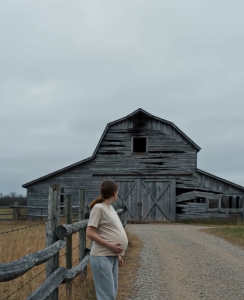
For years, Mark and I treated our little country house like a promise we had made to ourselves. It sat beyond two fields and birch trees. It was not fancy. The roof needed work, the porch creaked, and spring weeds came back as if they owned the place. Still, it was ours.
We used to drive there almost every weekend. On Friday evenings, Mark loaded the car before I finished packing. He complained about traffic, then smiled when the city disappeared behind us. At the cottage, we planted flowers, pulled carrots from the garden, trimmed berry bushes, and cooked outside until the air smelled of smoke and grass. Those weekends were simple, the happiest part of our marriage.
Then, slowly, Mark stopped wanting to go.
At first, his excuses seemed reasonable. He had a late meeting. He was exhausted. His head hurt. “Maybe next weekend,” he would say, kissing my forehead as if postponing the trip hurt him too.
I believed him because that was easier than admitting I felt something slipping away. Marriage teaches you to trust, but it also teaches you to recognize silence. Mark’s silence had changed. He no longer talked about fixing the porch or planting tomatoes. When I mentioned the house, his shoulders tightened before he forced a smile.
One afternoon, while I was folding laundry, my phone rang. It was our neighbor from the village, Mrs. Keller, a woman who knew everyone’s schedule better than the mail carrier did.
“Listen,” she said, trying not to sound nosy, “I saw your husband by the cottage yesterday.”
I laughed because I thought she had made a mistake. “Mark? No, that can’t be right. He was at work all day.”
“I know what he looks like, dear,” she replied. “He came out of your house and carried several boxes from the car. He was there quite a while.”
The towel in my hands slid to the floor. I thanked her, ended the call, and stood staring at nothing. My first thought was painful: another woman. I hated myself for thinking it, but once the idea entered my mind, it spread quickly. Why would he go there without telling me? Why lie about work? Why carry boxes into a house he claimed he no longer wanted to visit?
That evening, I watched him more closely than ever. He ate quietly, answered my questions with short phrases, and kept his phone screen down. When I asked how work had been the day before, he barely looked up.
“Busy,” he said. “Nothing special.”
Nothing special. The words settled between us like a closed door.
The next weekend, I tried one last time. “Maybe we should go to the cottage tomorrow,” I said carefully. “The garden probably needs attention.”
Mark froze. His fingers stopped around his coffee mug.
“I don’t think so,” he said. “I’m tired.”
“I could go alone,” I offered. “Just for a few hours. Some fresh air might do me good.”
His reaction came too fast. “No.”
I stared at him.
He softened his voice immediately, but it was too late. “I mean, I’d rather you didn’t. The place may be a mess. I’ll feel calmer if you stay home.”
Calmer. That word told me everything and nothing at once. If there was no secret at the cottage, why would my going there make him anxious?
On Saturday morning, Mark said he had to run errands. He wore old jeans, packed a canvas bag, and left through the garage. I waited until his car left our street. Then I grabbed my keys.
I did not feel brave. I felt foolish, frightened, and guilty, as if I were betraying our marriage by wanting the truth. I kept several cars between us on the highway and prayed he would not notice me. When he turned toward the village, my stomach dropped. Mrs. Keller had not been mistaken.
I parked behind trees before the bend and waited until his car disappeared into the driveway. Ten minutes passed. Then fifteen. My hands were cold despite the warm afternoon. At last, I walked the remaining distance, hearing every crunch of gravel under my shoes.
The cottage looked peaceful from outside. The curtains were drawn. The flowerbeds were overgrown. Nothing seemed wrong, and somehow that made everything worse.
Mark’s car was parked near the shed, but I did not see him. The front door was not fully closed.
I pushed it open.
For one breath, my mind refused to understand what I was seeing. The living room we had once filled with picnic blankets and muddy boots had been transformed. The furniture was pushed against the walls. Plastic sheets covered the floor. Stacks of boxes stood everywhere, each labeled in Mark’s handwriting. There were medical supplies, old photographs, clothes, canned food, blankets, and rows of prescription bottles on the dining table.
Then I saw the back bedroom door, slightly open, with light beneath it.
A sound came from inside. Not a woman’s laugh. Not music. A weak, broken cough.
My fear changed shape. The jealous thoughts that had tortured me suddenly felt small and shameful. I crossed the room and opened the bedroom door.
The smell of disinfectant met me first. Then I saw an elderly man lying in the bed, thin and pale, with an oxygen machine humming beside him. He turned his head slowly toward me. His eyes were cloudy, but alive. Beside the bed stood Mark, holding a glass of water.
The glass slipped from his hand and shattered on the floor.
“Anna,” he whispered.
I could not move. I looked from my husband to the man in the bed, then to the photographs taped along the wall. In one faded picture, Mark was a boy, standing beside that same man. They had the same eyes.
“Who is he?” I asked, though part of me already knew.
Mark’s face crumpled. “My father.”
I remembered the story Mark had told me when we first met: his father had abandoned the family, vanished without a word, and never looked back. Mark had spoken of him with a bitterness so old it sounded like stone.
“He found me six months ago,” Mark said. “He’s dying. He had nowhere to go.”
The room tilted around me. “And you hid him here?”
“I didn’t know how to tell you.” His voice broke. “I hated him most of my life. Then he showed up sick, alone, and sorry. I thought I could handle it by myself. I thought if I brought you into it, I would have to explain feelings I don’t understand.”
The old man lifted a trembling hand. “Don’t blame him,” he rasped. “I asked him not to.”
Real horror is not always a stranger in the dark. Sometimes it is seeing the person you love crushed under a secret too heavy to carry.
I looked at Mark, at the boxes, at the bed, at the life he had hidden inside the house where we once came to feel free. I had expected betrayal. Instead, I found pain, pride, fear, and a forgiveness neither of us knew how to name.
And for the first time in months, my husband quietly reached for my hand.