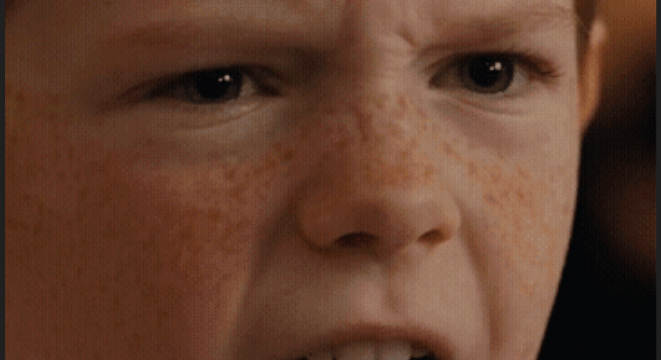
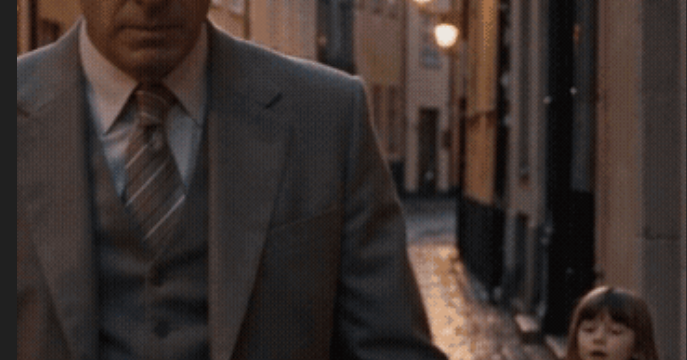
At 20, she married a wealthy man to save her family from ruin. By sunrise, she was running from his mansion with a secret she could barely understand.
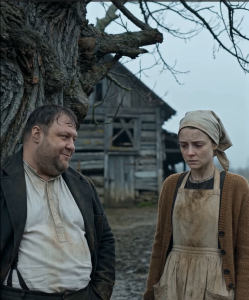
The poor milkmaid was only twenty years old, but hardship had already made her feel older. Every morning before the sky turned pale, she stepped into cold boots, tied back her hair, and walked through the damp fields toward the farm. Her hands always carried the scent of milk, hay, and work.
She lived at the edge of the village in a small wooden house that groaned whenever the wind pushed against it. The roof leaked, the stove smoked when the firewood was damp, and the cupboards were often nearly empty. Inside that house was her mother, thin and tired, coughing through long nights and trying to hide pain she could no longer afford to treat.
Her father was gone too, though not by death. He sat behind prison walls because of debts he had failed to pay. He had borrowed money when the harvest went bad, then borrowed more when his wife became ill. By the time he realized he could never climb out, it was too late. The village remembered his mistake better than it remembered his kindness.
People talked. Some blamed the father. Some pitied the mother. Some looked at the daughter and whispered that beauty was useless when there was no bread on the table. The girl heard all of it and said nothing. She had learned that pride did not fill an empty bowl.
She worked from dawn until dark, carrying buckets, feeding calves, cleaning stalls, and selling milk to families who counted every coin twice. On good weeks, she bought bread, potatoes, and a little medicine. On bad weeks, she told her mother she had already eaten at the farm, then went to bed hungry.
At night, when the village grew quiet, she sat beside the window and looked at the road. She wondered how long her mother could last without proper treatment, whether her father would come home broken, and what she was supposed to do.
That was when the wealthy landowner entered their lives.
He arrived on a gray afternoon in a black car that looked almost unreal against the muddy lane. Everyone in the village knew his name. He owned fields, barns, and houses. He was about forty, tall and sharply dressed, with a gaze that made people lower their voices.
He did not come with flowers, kindness, or warm greetings. He stepped into the poor wooden house as if he were entering one of his offices. He looked at the cracked walls, the thin blanket, and the frightened young woman by the stove. His face showed no surprise.
“I know about your father,” he said calmly. “I know about the debts. I know about your mother’s illness.”
The girl felt shame rise in her throat, but she stood still.
Then he made his offer.
“I will pay everything,” he said. “Your father will be released early. Your mother will have doctors, medicine, and a warm room. Your family will never worry about money again.”
Her mother gripped the blanket.
The girl did not answer, because she knew there had to be more.
The landowner looked directly at her. “You will marry me,” he continued. “You will give my name an heir. A son, if God allows it. I have only one year left to live. After that, everything will be arranged for your family.”
He said it without trembling, without pleading, almost as if he were discussing the purchase of a field. The words were terrible, yet his voice remained steady.
The girl stared at him. One year left to live. That was what he claimed the doctors had told him. Wealth had not saved him. For the first time, beneath his expensive suit and confident manner, she saw a man trapped by something darker than poverty.
Still, the offer chilled her. Marriage was not a sack of grain to be traded. A child was not a coin placed on a table. Yet when she looked at her mother’s hollow cheeks and thought of her father behind bars, her resistance weakened. Desperation has a cruel way of dressing itself as duty.
She told herself she was not doing it for money. She told herself she was saving her family. She told herself he would be gone within a year, and then she could rebuild what remained of her life. She repeated those thoughts until they sounded almost true.
So she agreed.
The wedding happened quickly and quietly. There was no music in the square, no table filled with laughter, no dancing until midnight. The villagers watched from doorways and windows as the poor milkmaid became the wife of the richest man in the region. Others shook their heads, certain that no blessing could grow from such a bargain.
The mansion stood on a hill above the village. To the girl, it looked less like a home than a place built to keep the world out. Servants moved silently through polished halls. The rooms were warm, but she felt cold inside them.
That evening, after the servants disappeared, her husband led her through a long corridor to a private room. He was pale and tired, but his voice remained controlled.
“There is something you must understand,” he said.
The girl’s heart began to race.
He unlocked a cabinet and pulled out a thick folder. Inside were documents, medical records, letters, and a sealed envelope. He laid them on the table one by one.
“My illness is real,” he said. “But the danger in this house is not only my death.”
Before she could ask what he meant, a noise came from behind the wall. A soft scrape. Then another. Someone was listening.
The landowner’s face changed. For the first time, she saw fear in him.
He moved quickly to the bookcase, pressed a hidden latch, and opened a narrow panel. Behind it was a small passage.
The girl backed away, horrified.
“My relatives have been waiting for me to die,” he whispered. “They want the estate. They do not want a wife here. They do not want an heir. And if they believe you might carry my legacy, you will not be safe.”
In the darkness, she saw a figure vanish down the hidden passage.
Her whole body went numb.
He handed her the sealed envelope and a key. “If anything happens to me, take these to the attorney in town. Trust no one in this house.”
At that moment, footsteps rushed beyond the door. Voices hissed in the corridor. The girl understood then that she had not married into comfort. She had stepped into a war she had never asked for.
Before dawn, while the mansion still slept, she ran.
She crossed the courtyard in the same muddy boots she had worn as a milkmaid, clutching the envelope against her chest. She did not look back at the iron gates.
By sunrise, the richest house in the region was behind her, and the road ahead was uncertain. But she knew one thing clearly: survival was not the same as surrender. And whatever secret that house was hiding, she would not let fear decide the rest of her life, no matter how rich those silent walls looked.