They thought she was nobody because of her plain coat and quiet seat in First Class. But by the time the plane landed, every cruel whisper had become evidence.
The laughter began so softly it almost sounded polite.
A raised eyebrow. A smile hidden behind a manicured hand. A whispered comment that traveled one seat, yet still carried enough sharpness to cut.
First Class had its own silence. It was not peaceful. It was expensive. Champagne glasses rested beside folded menus, designer watches caught the cabin lights, and low conversations moved with the confidence of people used to being served quickly and questioned rarely.
Then she stepped in.
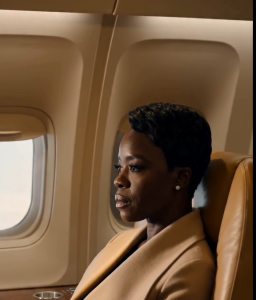
She wore a plain dark coat, sensible shoes, and no jewelry except a simple watch. In one hand, she carried a small canvas bag, the kind someone might bring to a grocery store, not the front cabin of an international flight. When she stopped at seat 2A and placed the bag at her feet, several passengers looked up.
One man leaned toward his wife, barely hiding his smirk.
“Are they letting anyone sit up here now?”
His wife laughed into her glass.
Across the aisle, a hedge-fund manager murmured, “Probably traveling as someone’s guest. You can always tell.”
The woman in 2A gave no sign that she had heard. She buckled her seat belt, folded her hands, and looked out the window as the engines began their deep roar.
A flight attendant paused beside her seat. Her smile was professional, but her eyes carried hesitation.
“Ma’am,” she said gently, “may I check your boarding pass again?”
The woman handed it over without complaint.
The attendant read it. Her expression changed for only a second, surprise followed by something close to recognition. Then she returned the pass with both hands.
“Thank you, ma’am,” she said, more quietly than before.
The passengers nearby noticed the exchange, but not its meaning. They saw only what they had already decided to see: a woman who did not belong among them.
As the plane climbed above the clouds and the seat belt sign turned off, the cabin relaxed. Drinks were served. Laptops opened. Voices grew warmer, looser, less guarded.
And the remarks grew bolder.
“Unbelievable,” the hedge-fund manager said, loud enough for three rows. “Some people truly have no sense of place.”
The woman closed her eyes.
She was not sleeping.
She was listening.
Every word. Every name. Every careless confession dropped between sips of wine and bites of warmed bread. They spoke as if altitude made them untouchable, as if polished shoes and expensive tickets could turn a crime into a business plan.
Two men behind her discussed transfers through offshore accounts. A woman in row 1 mentioned a foundation that existed only on paper. The hedge-fund manager laughed about regulators being “months behind.” Another man complained that a witness had “become a problem.”
The woman in 2A kept her breathing even. Her face remained calm. Only once did she move with purpose, lifting her wrist and tapping the face of her watch three times.
No one noticed.
When turbulence shook the cabin, glasses rattled and a few passengers grabbed their armrests. A man across the aisle laughed nervously and looked toward her.
“Hope she does not get sick,” he said. “That would ruin the atmosphere.”
Hours later, the lights dimmed for descent. The city appeared below in scattered lines of gold. The captain’s voice came over the speakers.
“Ladies and gentlemen, we’ll be landing shortly. Please return your seats to the upright position and remain seated with your seat belts fastened.”
The woman opened her eyes.
The plane touched down with a clean, steady roll. A few passengers clapped softly, pleased with themselves, pleased with the landing, pleased with the world continuing to obey its usual order.
But when the aircraft stopped, the doors did not open.
The seat belt sign remained on.
Then the lead flight attendant picked up the intercom. Her voice was controlled, but tighter than before.
“Ladies and gentlemen, please remain seated until further notice.”
Then the cockpit door opened.
Two uniformed customs agents stepped into the aisle.
The silence changed instantly. It became heavy, alert, and afraid.
The agents did not scan the cabin. They did not ask for passports. They did not stop at the men with tailored suits or the women with diamond bracelets.
They walked straight to seat 2A.
One agent inclined his head with clear respect.
“Ma’am,” he said, “welcome back.”
She stood without hurry. She lifted the canvas bag, smoothed her coat, and nodded once.
The murmurs around her sharpened into shock.
The agent gestured toward the front of the aircraft, past First Class, past the cockpit, toward a private exit ordinary passengers would never use.
As she stepped into the aisle, the hedge-fund manager finally found his voice.
“Wait,” he said, his confidence cracking. “Who is she?”
The agent did not stop walking.
“Lead witness in an international financial trafficking investigation,” he answered. “And several passengers on this aircraft will be taken into custody next.”
The woman did not look back.
Behind her, leather seats creaked as people shifted, suddenly aware that every joke, every whisper, every arrogant assumption had traveled farther than they intended. They had thought they were mocking a harmless stranger. They had thought the woman in the plain coat was beneath notice.
They had been wrong.
She had not been someone’s guest. She had not been a mistake. She had been protected by the people waiting on the ground.
The forward door closed behind her, but the aisle stayed frozen. No one laughed. No one reached for champagne. The hedge-fund manager stared at his hands as if they belonged to a man he had never met.
Across the aisle, a tech executive pulled out his phone, then stopped when an agent’s eyes moved toward him. The warning had been clear. Devices were to remain off until customs cleared the cabin.
The agents returned, and this time there was no courtesy in their pace. They stopped at row 1.
“Sir,” one said, “please stand.”
The man forced a smile that did not reach his eyes.
“What is this about? There must be some mistake.”
The agent’s voice stayed calm.
“Money laundering. Wire fraud. Obstruction of justice.”
The smile disappeared.
One by one, names were called. Seats emptied. Jackets remained draped over armrests like shed skins. Passports were collected. Hands were guided behind backs. Every arrest carried the same realization: the conversations they believed were private had become evidence.
Inside the terminal, the woman from 2A had already cleared customs. She stood beside officials, speaking quietly, not pleading, not explaining, but coordinating. A senior agent handed her a tablet.
“The audio was clean,” he said. “Your recall was exact.”
She looked through the glass at the passengers being escorted out by a longer route, heads lowered, wrists secured.
“They always talk more,” she said, “when they think you do not matter.”
Then she turned toward a corridor marked AUTHORIZED PERSONNEL ONLY.
Behind her, a final announcement crackled through the aircraft speakers, soft and almost apologetic.
“Thank you for flying with us.”
No one answered.
Because by the time the plane landed, the hierarchy had changed. First Class was no longer about who had the widest seat, the coldest champagne, or the loudest opinion.
It was about who walked away free.