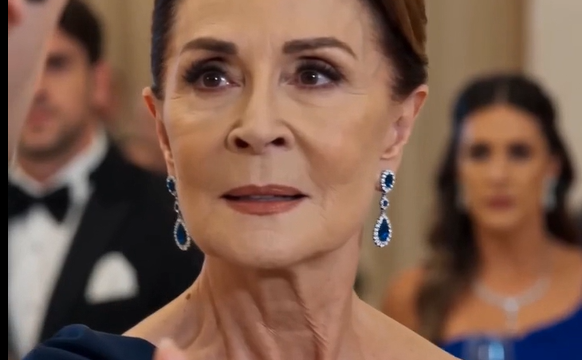
When Clara Whitmore became the new Mrs. Harrington, the mansion changed overnight. For decades, the home had been known for warmth, quiet manners, and loyal staff. Edward Harrington, a widower in his late sixties, had shared that life with Margaret. After Margaret passed, the house grew still, and Edward grew lonely. Clara arrived during that loneliness, polished, charming, and eager to be admired. She was younger than Edward, confident, and determined to enter high society as if the Harrington name had always belonged to her.

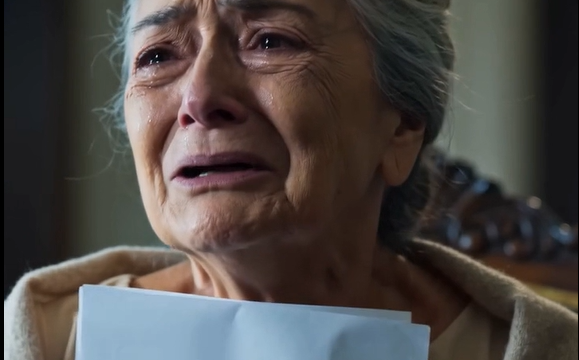
The person she disliked most was Rosa, the maid who had served the family for thirty years. Rosa was modest, silver-haired, but everyone knew her value. She remembered every birthday, every favorite meal, every room, and every sorrow. She had cared for Margaret during her illness, comforted Edward’s children when they were young, and kept the household steady through loss. To Clara, however, Rosa was only a reminder that another woman’s memory still lived there.
On the night Clara hosted her first formal dinner as mistress of the mansion, she wanted to impress everyone. The dining room glittered with crystal glasses, white roses, polished silver, and candles reflected in long windows. Wealthy neighbors, relatives, and Edward’s business friends gathered around the table, watching Clara smile like a queen receiving her court. Edward sat quietly at the head of the table, pleased but uneasy. His adult children had come out of respect for their father, though they still missed their mother deeply.
Rosa worked near the kitchen doors, calm. She wore her plain black dress and white apron, serving each course without drawing attention. As dessert was being prepared, she noticed a framed photograph on the sideboard sitting crooked. It showed Margaret and Edward standing beneath the old oak tree in the garden. Rosa gently straightened it.
Clara noticed immediately.
“What do you think you’re doing?” Clara asked, her voice silencing the table.
Rosa turned. “The frame was crooked, ma’am. I only meant to fix it.”
Clara gave a small, cold laugh. “How sweet. But perhaps you have forgotten your place.”
Guests shifted. Edward looked down. Rosa lowered her eyes. “I apologize if I offended you.”
“Offended me?” Clara said, stepping closer. “You embarrassed me. I am the lady of this house now. I decide what stays, what goes, and who is allowed to touch anything.”
Helen, Edward’s oldest daughter, stiffened. Her brother Daniel put a hand over hers, warning her to wait.
Clara pointed toward the hallway. “Take off that apron and leave. Tonight. I will not have a maid acting as if she owns this mansion.”
The words hit hard. Rosa had given half her life to that family. Even guests who barely knew her understood the cruelty of humiliating an older woman before guests.
Edward said, “Clara, this is not necessary.”
Clara smiled coldly. “Edward, a home needs order. I am setting boundaries.”
Rosa looked at him, then at the photograph. She did not argue or cry. Instead, she reached into the pocket of her apron.
Clara smirked. “What now? A housekeeping receipt?”
Rosa removed a small brass key tied to a faded blue ribbon. It was old, worn smooth by years of use. Several recognized it. Clara did not.
Helen stood, her chair scraping the floor. “Rosa, where did you get that?”
Rosa held the key carefully. “Mrs. Margaret gave it to me three days before she passed.”
Edward’s face lost its color. “Margaret gave you that?”
Clara frowned. “It is only a key. Why stare?”
Helen’s voice trembled. “That is the key to Mother’s private study.”
The private study had been locked since Margaret’s death. Edward had never opened it. Clara had asked about it several times, suspecting jewelry, antiques, or important papers, but Edward always avoided the subject. Now the key was in Rosa’s hand.
Rosa spoke quietly. “Mrs. Margaret told me to keep it until the day someone tried to remove me from this house.”
Silence settled over the mansion.
Clara laughed, but it sounded forced. “That is ridiculous. A maid cannot decide anything here.”
“She did not give me authority,” Rosa said. “She gave me a responsibility.”
Edward stood slowly. “She told me she had made arrangements, but I never understood what she meant.”
Rosa turned toward the hall. “Then tonight you should know.”
Pride kept Clara from backing down. “Fine. Open it. Let everyone see this grand secret.”
Rosa led them to the east wing, where Margaret’s study waited at the end of a quiet corridor. The door had gathered dust. Rosa placed the brass key into the lock. The click echoed.
Inside, the room smelled of paper, lavender, and old wood. Margaret’s books still lined the shelves. Her writing desk sat by the window. On top of it lay a sealed envelope addressed in her hand: To be opened if Rosa is ever asked to leave.
Rosa gave it to Edward.
His hands shook as he opened it. He read silently, then read aloud.
“My dearest Edward, if this letter is being opened, someone has forgotten what this house stands for. Rosa is not merely an employee. She is the person who held this family together when illness, grief, and pride nearly broke us. Years ago, when the estate faced financial ruin, Rosa used her inheritance to help save this home. She asked for no praise and no repayment. In return, I placed legal protection in the trust, granting Rosa lifetime residence and authority over the preservation of this household. No spouse, heir, or guest may dismiss her from the Harrington mansion.”
A gasp passed through the room.
Clara stepped back. “That cannot be real.”
Helen’s eyes filled with tears. “Mother’s attorney prepared every trust document. It is real.”
Edward turned to Rosa, devastated. “You saved the house?”
Rosa folded her hands. “Mrs. Margaret believed family should be protected quietly when possible.”
Edward wept then, from the weight of years misunderstood. He had thought business had saved the estate. He never knew Rosa had given up her parents’ inheritance to protect the Harrington home.
Clara looked around and saw the change in every face. The guests no longer admired her silk, diamonds, or confidence. They saw only the cruelty she had shown to a woman who had more claim to the soul of the mansion than she ever would.
Rosa faced Clara calmly. “I never wanted power over anyone. I only wanted respect for the people and memories that built this home.”
Clara had no answer.
Edward took Rosa’s hands. “You should never have had to prove your place here.”
Rosa looked at Margaret’s desk, then the family. “A home is not protected by money or titles. It is protected by loyalty.”
By morning, the story had traveled through every circle Clara wanted to impress. Inside the mansion, Margaret’s photograph returned to the sideboard. Rosa stayed, not as a servant, but as the woman who had quietly saved them all. And Clara finally learned the lesson everyone else understood that night: before you humiliate someone you believe is beneath you, make sure you know what truth they are carrying in their pocket.