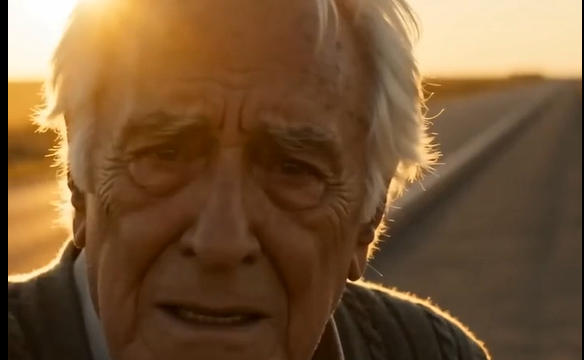
Eleanor Whitmore entered the competition quietly, wearing a pale blue cardigan, sensible shoes, and a pearl pin that looked older than most people in the room. She was seventy-two, soft-spoken, and easy to overlook. The county arts hall buzzed with cameras, judges, and contestants preparing for the annual Heritage Baking Championship. To Eleanor, it was about keeping a promise she had made long ago.
Her entry sat beneath a glass cover at the far end of the table: an apple spice cake with caramel glaze and a handwritten recipe card. She had baked that cake for her children, neighbors, and church suppers. Food, to Eleanor, had always been love made visible, especially when life felt lonely or uncertain.
Across the room, Vanessa Cole watched her with a smile that never reached her eyes. Vanessa was young, fashionable, and confident. Her glossy lemon-rose pastry tower stood under bright lights, surrounded by edible flowers. She had told everyone this was her year. She had followers cheering and a speech prepared.
At first, Vanessa only laughed under her breath. But when people gathered around Eleanor’s cake, Vanessa walked over.
“Well, this is adorable,” she said. “I didn’t realize they were letting grandmothers enter the professional division now.”
The conversation stopped. Eleanor looked up, surprised but calm.
Vanessa tilted her head. “No offense, ma’am, but this is a serious competition. People trained for this. Some of us built brands. A church picnic cake probably belongs at a bake sale, not beside real culinary work.”
A few people shifted uncomfortably. One woman lowered her eyes. No one wanted to challenge Vanessa.
Eleanor placed both hands around the edge of her table. “I followed the rules,” she said gently.
“Oh, I’m sure you did,” Vanessa replied. “Rules are one thing. Standards are another.”
The words landed sharply. Eleanor’s face did not change, but her fingers tightened. She had heard that tone before, the tone people used when they believed age made someone invisible or out of place.
Vanessa leaned closer to the glass cover. “It even looks old-fashioned.”
Eleanor nodded once. “It is.”
Vanessa laughed. “At least you admit it.”
That drew a few uneasy chuckles from people who wanted the moment to end. Vanessa turned toward a camera phone and smiled brightly. “I respect tradition, of course,” she said. “But competitions should move forward. We can’t keep rewarding nostalgia.”
Eleanor did not answer. She adjusted the recipe card and looked toward the judges’ table. Her silence made Vanessa smirk. To Vanessa, silence meant defeat.
The judging began at noon. Three judges moved from station to station: a retired pastry chef, a cookbook editor, and a restaurant owner known for honesty. They tasted, took notes, and asked questions. Vanessa was charming when they reached her pastry tower. She described modern presentation and culinary identity.
When they came to Eleanor’s table, Vanessa folded her arms.
The first judge tasted the cake and paused. The second looked down at the recipe card. The third judge closed his eyes, as if trying to place a memory.
Eleanor answered their questions simply. The apples were local. The spice blend was mixed by hand. The caramel was cooked slowly. She had not attended culinary school. She had learned from her mother, who had learned from her own mother before her.
The cookbook editor asked about the card. “Is this the original recipe?”
Eleanor smiled faintly. “It’s a copy. The original is at home in a tin box.”
Vanessa rolled her eyes, but the judges kept reading.
After the tasting ended, contestants waited near the stage. Vanessa stood in the center of her group. Eleanor sat alone on a folding chair, hands in her lap. A young volunteer offered her water. She thanked him by name, because kindness was still her habit.
Finally, the event director stepped to the microphone. “Thank you all for sharing your talent, your history, and your hard work. This year’s decision was not simple.”
Vanessa straightened. Her smile returned.
“In third place,” the director announced, “Marisol Grant.”
Applause filled the room.
“In second place, Vanessa Cole.”
For one frozen second, Vanessa did not move. Her smile stayed on her face, but everything behind it changed. Second place was not part of her plan. She walked up stiffly, accepted the ribbon, and whispered, “There must be a mistake.”
The director continued. “And this year’s Heritage Baking Champion is Eleanor Whitmore.”
The room erupted.
Eleanor blinked with quiet dignity and grace again. The volunteer helped her stand. She walked slowly to the stage. The cookbook editor clutched the recipe card copy. Vanessa’s face went pale.
But the surprise was not finished.
The restaurant owner took the microphone. “Before Mrs. Whitmore accepts her award, the judges would like to recognize something extraordinary. Her cake is not just beautifully made. It matches a lost regional recipe we have been searching for during our historical food preservation project.”
Murmurs moved through the hall.
He turned to Eleanor. “Mrs. Whitmore, your family recipe appears to be the missing Whitmore Orchard Cake, last documented more than eighty years ago. It was believed lost after the old orchard closed.”
Eleanor’s eyes filled with tears. “My mother always said it mattered,” she whispered.
The cookbook editor added, “With your permission, we would like to feature your recipe in the state culinary archive and in our upcoming heritage cookbook. Your name, and your family’s story, will be preserved with it.”
The applause grew louder.
Vanessa stood below the stage, holding her second-place ribbon like it had become too heavy. The woman she had mocked was not an embarrassment. She was a bridge to history. The “old-fashioned” cake was the most valuable entry in the room.
Eleanor stepped to the microphone. For the first time all day, every person listened.
“I almost didn’t come,” she said. “I thought maybe I was too old to stand beside all this talent. Then I remembered something my mother told me: if you carry something worth sharing, don’t hide it because someone else cannot see its worth.”
Her voice trembled, but it did not break.
She looked gently toward Vanessa, not with anger, but with calm strength. “Kindness is also a skill,” Eleanor said. “And like any skill, it shows when pressure comes.”
No one laughed then. No one looked away.
After the ceremony, Vanessa approached Eleanor near the display tables. The cameras were gone. The room was quieter.
“I shouldn’t have said what I said,” Vanessa murmured.
Eleanor studied her for a moment. “No, dear. You shouldn’t have.”
Vanessa swallowed. “I’m sorry.”
Eleanor nodded. “Then let it teach you.”
She lifted the glass cover and cut a small slice of cake. Vanessa looked startled when Eleanor placed it on a plate and offered it to her.
“Recipes survive,” Eleanor said, “because someone is willing to share.”
Vanessa took the plate with both hands.
Years later, people still talked about that competition, because an elderly woman reminded everyone what true value looks like. It is not always loud. It does not always sparkle under bright lights. Sometimes it arrives quietly, wearing sensible shoes, carrying a handwritten card, and waiting for the world to remember that dignity never goes out of style.