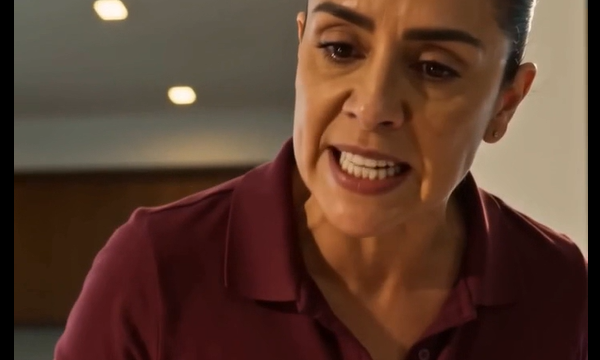
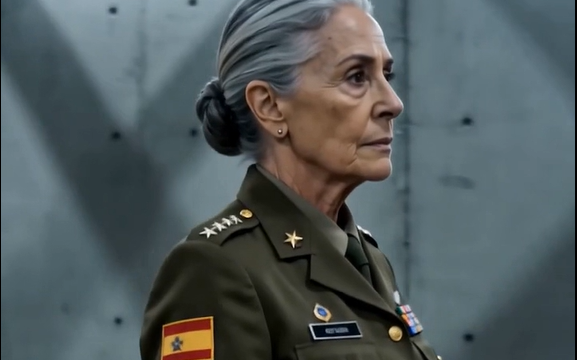
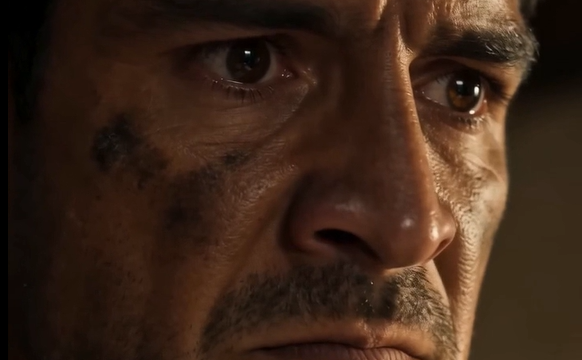
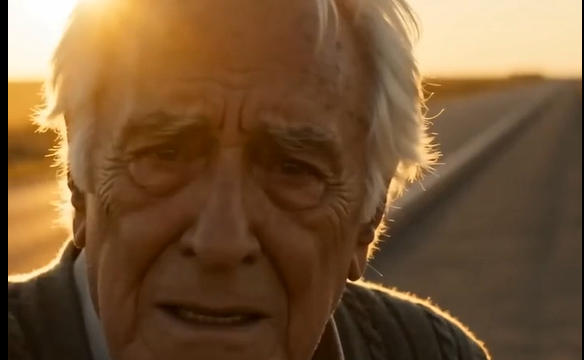
Margaret Ellis did not go to St. Anne’s Chapel expecting to uncover anything. She went because Evelyn Moore had once been kind to her mother during a hard winter, bringing groceries, soup, and quiet company when others had disappeared. Margaret barely knew Evelyn herself, but gratitude has a long memory. When she saw the obituary in the Sunday paper, she felt one simple duty: attend the funeral, bow her head, and say goodbye to a woman whose goodness had touched her family.

Her husband, Daniel, said he could not join her. He claimed there was a meeting at the office, though he had been semi-retired for months and rarely cared about meetings anymore. He looked tired at breakfast, pushing his coffee cup back and forth without drinking. Margaret asked if something was wrong.
“Just work,” he said. “Go without me.”
So she did.
The chapel was small, brightened by stained-glass windows and filled with the soft scent of lilies. A closed casket stood near the altar beneath white roses. People spoke in low voices, exchanging memories of Evelyn’s patience, her neighborly kindness, and her quiet years as a school secretary. Margaret signed the guest book, then walked slowly down the aisle.
That was when she saw Daniel.
He stood beside the casket in his dark funeral suit, head bowed, one hand resting on the polished wood. He was not at work. He was not merely paying respects. His shoulders carried a grief Margaret had never seen in him.
She stopped near the back pews, too stunned to speak. Before she could call his name, an elderly woman in a gray shawl touched Daniel’s arm and whispered, “She waited for you, Danny. Evelyn never stopped hoping.”
Danny.
Only Margaret and Daniel’s late mother had ever called him that. Hearing it from a stranger beside Evelyn Moore’s casket made the room seem suddenly colder.
Daniel covered his face. “I should have come sooner,” he said.
Margaret stepped behind a column. The woman handed Daniel a small envelope. He took it with trembling fingers.
“She wanted you to have this,” the woman said. “She said you would understand.”
The funeral service began, and Margaret sat alone in the last row. The pastor spoke of Evelyn as a gentle woman who had lived simply, helped quietly, and carried one sorrow all her life: a son she had lost long ago. Margaret listened for Daniel’s name, but it never came. Still, Daniel sat near the front, grieving like someone who had lost a piece of himself.
After the final prayer, mourners drifted toward the reception room. Daniel remained by the casket. Margaret intended to confront him, but a framed photograph on a side table stopped her first. It showed Evelyn as a young woman standing beside a small boy with serious eyes and a familiar tilt of the head. The handwritten label read: Evelyn and my Danny.
Margaret’s breath caught.
Behind the frame lay another photograph. In it, Daniel was perhaps eighteen, standing outside a modest house with Evelyn. On the back, in careful blue ink, someone had written: The day he left to become someone else.
Margaret found the woman in the gray shawl near the hallway. “Excuse me,” she said, forcing calm into her voice. “I’m Margaret Ellis. Daniel’s wife.”
The woman looked at her with sorrow. “Then he never told you.”
“No,” Margaret said. “He did not.”
Her name was Ruth, Evelyn’s neighbor and closest friend. Ruth told Margaret the truth. Evelyn had not been Daniel’s old sweetheart. She was not a hidden romance, or a scandal. Evelyn Moore was Daniel’s birth mother.
Margaret gripped the back of a chair.
Ruth explained that Evelyn had been nineteen, unmarried, and nearly penniless when Daniel was born. She allowed a stable couple, the Ellises, to adopt him. They loved him deeply. But when Daniel turned eighteen, she wrote him a letter. He came to see her once. They spent an afternoon talking. Then he left, promising he needed time.
Time became silence.
“Did he know she was ill?” Margaret asked.
Ruth nodded. “She wrote to him last spring. Twice.”
Margaret remembered last spring. Daniel had slept poorly, forgotten small things. She had thought he was worried about aging or retirement. Now she understood he had been standing at the edge of a truth he could not face.
Ruth handed her another envelope. “Evelyn asked me to give you this if you came. She said a wife deserves the truth.”
Margaret opened it in her car. Evelyn’s letter was short and careful. She apologized for any hurt her silence had caused. She wrote that she had loved Daniel every day, not because she wanted to claim him. She said she only hoped he might forgive a frightened young woman who believed giving him away was the only way to save him.
The final line blurred through Margaret’s tears: Please do not let my absence become a wall between you. Love him honestly, even if he has not known how to be honest with himself.
That evening, Daniel came home after dark. Margaret was waiting at the kitchen table with the photograph in front of her.
He stopped in the doorway. His face changed before he spoke.
“You knew,” she said.
Daniel sat down slowly, as if every year of silence had finally found its weight. For a long moment, he only stared at the picture. Then tears filled his eyes.
“I was ashamed,” he whispered. “Not of her. Of myself. I waited too long. I did not know how to love the parents who raised me and still make room for the mother who lost me.”
Margaret wanted to be furious, and part of her was. He had lied that morning. Worse, he had kept an entire chamber of his heart locked away from the woman who had shared his life. Yet beneath the anger was sadness, because she could see the secret had punished him too. For the first time, Margaret clearly understood that some secrets are not kept to deceive a spouse, but to avoid facing a private grief that has never learned how to speak.
“You should have told me,” she said.
“I know.”
“No,” Margaret replied, her voice breaking. “You should have let me stand beside you.”
He reached for her hand. Margaret let him hold it, but she did not pretend forgiveness was instant. Trust has to be rebuilt with truth.
In the weeks that followed, their marriage changed. It did not become perfect, but it became more honest. They visited Evelyn’s grave together. Daniel brought white roses. Margaret brought the photograph Ruth had given her. Standing in the quiet cemetery, Daniel finally whispered the name he had avoided for most of his life.
“Goodbye, Mom.”
Margaret stood beside him, not because the wound had vanished, but because love sometimes survives by telling the truth at last. She had entered the chapel to say farewell to a woman she barely knew. She left knowing that Evelyn Moore had not only changed Daniel’s past. She had forced their marriage into the open, where secrets could no longer breathe and healing could finally begin.