The church had been quiet enough to hear the soft flicker of candles near the altar. Rows of guests sat shoulder to shoulder in the wooden pews, dressed for a celebration and watching the couple beneath the crucifix. White flowers framed the front of the sanctuary, their pale petals glowing in the warm, solemn light. At the center stood an older priest in white and gold vestments. Beside him, the groom looked polished in a black tuxedo, white shirt, and black bow tie. Across from him, the bride stood in a white gown and veil, a sparkling tiara catching every small movement of light.
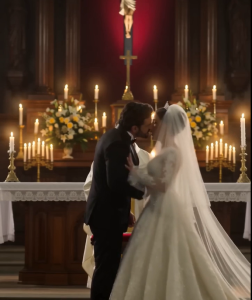
Everything appeared ready for the traditional ending to the ceremony.
The priest looked at the newly married couple and, in a calm ceremonial voice, said, “Puede besar a la novia.” You may kiss the bride.
A few guests smiled. Others leaned forward, expecting the familiar moment. The groom turned toward his bride and began to lean in.
She stepped back.
The movement was sudden and unmistakable. Her veil shifted behind her, and she lifted one hand between them before he could touch her.
“¡No me toques!” she said sharply. Don’t touch me.
A collective gasp moved through the church.
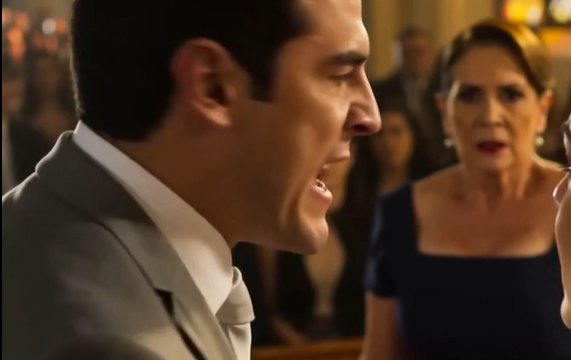
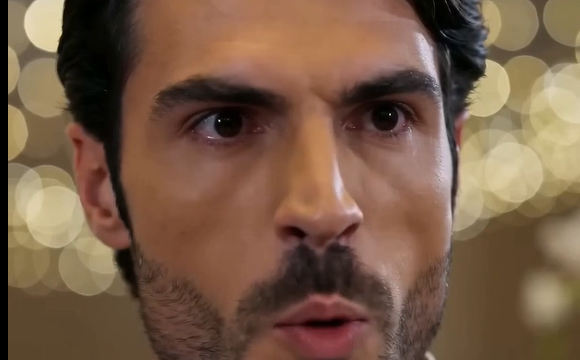
The groom froze. For a second, his face showed surprise. Then his expression hardened. His jaw tightened, his eyes narrowed, and the warmth expected from a groom on his wedding day disappeared. He moved just close enough to speak without letting the entire room hear.
“¿Te volviste loca?” he whispered. Have you gone crazy?
The bride did not look away.
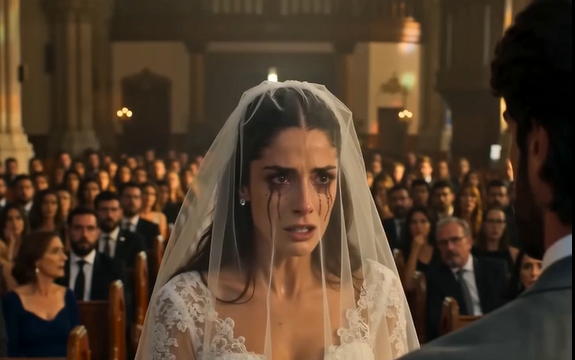
That was what changed the atmosphere more than anything else. She was not confused. She was not acting impulsively. Her face carried sadness, but beneath it was something stronger: resolve. Whatever had brought her to this point, she had already made a decision.
“I want a divorce,” she said.
The words were quiet, but in the stillness of the church they carried farther than either of them intended.
Whispers immediately began in the pews. Guests glanced at one another, trying to understand how a wedding ceremony had turned into a public confrontation in only seconds. Some stared at the bride. Others watched the groom, waiting for his response.
He stepped closer.
His posture suggested that he wanted to regain control before the scene became even more public. He did not shout. He did not make a dramatic gesture. Instead, he lowered his voice, using the privacy of a whisper even though dozens of people were only a few yards away.
The bride stayed where she was.
The groom studied her face, then reminded her of the leverage he believed he still had.
“Piénsalo bien,” he said. Think about it carefully.
Then came the warning.
“Tu padre depende de mí.”
Your father depends on me.
For an instant, the bride said nothing.
The words were designed to reach past her anger and strike at something more vulnerable. He was not simply asking her to reconsider the marriage. He was reminding her that her decision could affect someone she loved. In his mind, that connection was enough to make her retreat, lower her voice, and return to the role everyone in the church expected her to play.
But she did not retreat.
Her eyes briefly moved toward the guests.
They were all there: family members, friends, witnesses, people who had arrived expecting vows, blessings, photographs, and celebration. Now they sat in stunned silence, aware that something far more serious had been hidden beneath the formal clothes and beautiful decorations.
The bride looked back at the groom.
There was no visible panic in her expression. Whatever fear his warning might once have created no longer seemed strong enough to control her. She breathed steadily and held her ground.
The groom’s threat had changed the moment. Until then, the confrontation could have been dismissed as a private dispute erupting at the worst possible time. But his words revealed something deeper about the balance of power between them. He believed her father’s dependence on him gave him influence over her choices. He expected that influence to matter more than her decision to leave.
The bride answered by rejecting that expectation completely.
“Entonces que todos sepan quién es realmente mi esposo,” she said.
Then let everyone know who my husband really is.
The church fell into another stunned silence.
This time, the silence felt different. The first gasp had come from surprise when she refused the kiss. Now the guests were listening because her final statement suggested that the confrontation was only the beginning. She was no longer trying to keep the conflict contained between herself and the groom. She was choosing to bring the truth into the open.
No one in the pews could know every detail behind her decision, and the bride did not explain those details yet. What they could see was enough to understand the change before them. The kiss had become a refusal. A warning had become evidence of pressure. The groom had tried to make her think about what he could do through her father, while she had decided that fear would no longer determine what she said in front of others.
The groom’s confidence faltered.
He had approached her as though a quiet warning would restore order. Instead, it gave her a reason to speak more openly. The influence he had tried to use privately now risked becoming part of the very public conversation he wanted to avoid.
Around them, the elegant setting remained unchanged. Candles still glowed. Flowers still surrounded the altar. The wooden crucifix remained above them. The priest stood nearby, and the guests remained in their pews. Yet the meaning of the ceremony had shifted completely.
Only moments earlier, the church had been a place of tradition and celebration. Now it had become the setting for a woman drawing a clear boundary in front of everyone.
She had stopped the groom before he could kiss her. She had told him not to touch her. She had said she wanted a divorce. When he responded by invoking her father’s dependence on him, she refused to be silenced by the pressure.
Most importantly, she chose not to pretend.
That choice did not erase the sadness of the moment. A wedding was being shattered in public, and everyone present could feel the weight of it. The bride’s expression still carried pain. Her decision was not presented as easy or joyful. It was simply firm.
The groom, meanwhile, had lost the certainty with which he first leaned toward her at the altar. His attempt to control the conversation had failed. The final words belonged to the bride, and they left the room waiting for whatever truth she was prepared to reveal next.
Her face remained calm as the guests blurred behind her.
She had already done the hardest part: she had refused to stay silent when silence was being demanded of her.
In a place built around vows, witnesses, and promises, her most powerful statement was not a romantic one. It was a declaration that appearances would no longer decide her future.
The ceremony had begun with tradition.
It ended with truth standing at the altar.